Clutch Control for Smooth, Confident Driving
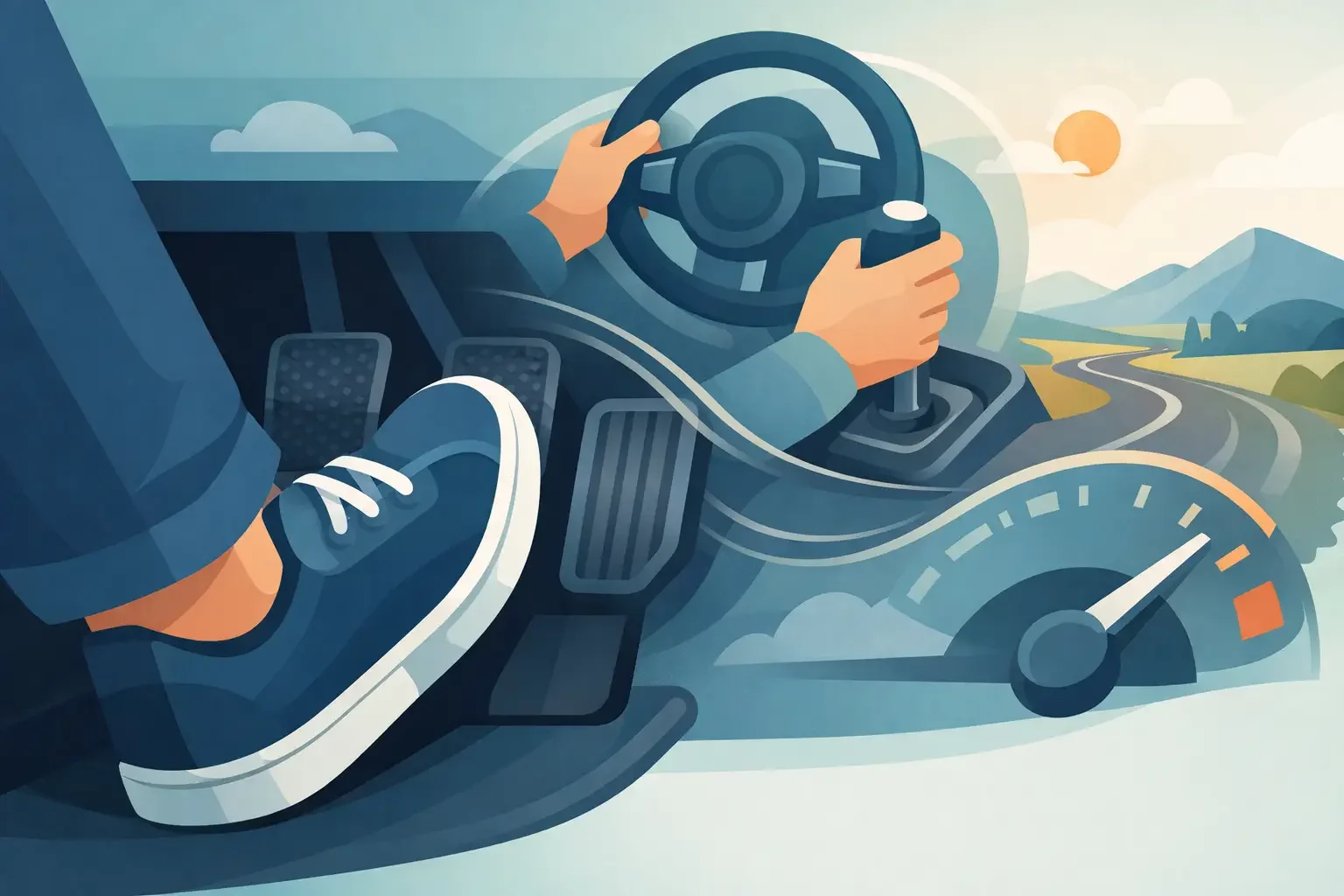
A car that keeps stalling at a busy Birmingham junction can make even a confident learner feel flustered. The good news is that clutch control is not about having perfectly coordinated feet from day one. It is about learning what the car is telling you, repeating the right routine and giving yourself enough time to set off safely.
For many learners, the clutch is the one part of manual driving that feels least natural at first. Your instructor can explain the process, but the real progress comes when your left foot starts to recognise the biting point without you having to think through every movement. With calm, focused practice, smooth pull-aways, hill starts and slow-moving traffic become far more manageable.
What clutch control actually means
The clutch connects the engine to the wheels. When the clutch pedal is fully down, the engine is disconnected from the wheels, allowing you to select a gear or come to a stop without stalling. As you bring the pedal up, the connection gradually returns.
Clutch control means being able to bring the pedal up to the point where the engine begins to take the car’s weight, then balancing it with the right amount of accelerator when needed. This point is commonly called the biting point.
Every car feels slightly different. In one car, the biting point may be fairly low; in another, it may be higher. That is why it is more useful to learn the signs than to memorise a pedal position. You may feel a slight vibration, hear the engine note change or see the front of the car lift a little. These are all clues that the clutch is beginning to engage.
Finding the biting point without rushing
Before moving off, make sure the car is secure, select first gear and prepare properly. With the clutch fully down, gently raise it until you feel the biting point. Keep your heel supported where comfortable and use a slow, controlled lift rather than letting the pedal spring up.
At this stage, your instructor may ask you to pause. This is not wasted time. Holding the car at the biting point briefly helps you recognise the feedback from the vehicle. On level ground, many modern diesel training cars will begin to creep forward with little or no accelerator. In a petrol car, or when pulling away uphill, you will normally need gentle accelerator as well.
The key word is gentle. A large press on the accelerator creates more noise and can make the car shoot forward once the clutch comes up. Too little accelerator, combined with lifting the clutch too quickly, can cause the engine to stall. Neither is a disaster, but both give you useful information for the next attempt.
Once the car starts moving, continue lifting the clutch smoothly until it is fully up. Do not rest your foot on the clutch pedal while driving. This is known as riding the clutch, and it can reduce your control and cause unnecessary wear.
A simple moving-off routine
A reliable routine reduces panic, especially when there is traffic waiting behind you. Prepare the car, find the biting point, complete your observations, then add light accelerator if required and move off with control. As the car gathers momentum, bring the clutch fully up.
Your observations still matter just as much as your feet. A smooth pull-away is not useful if you move into the path of a cyclist, pedestrian or passing vehicle. Good clutch control supports safe driving; it does not replace looking properly.
Why learners stall, and what to do next
Stalling is usually caused by lifting the clutch too fast, not using enough accelerator, or trying to do both while feeling rushed. It happens to experienced drivers too, particularly when changing cars or setting off on a steep hill. It is a normal part of learning, not proof that you cannot drive a manual car.
If you stall, keep calm. Secure the car with the footbrake and handbrake if necessary, select neutral, restart the engine and begin again. Do not try to recover in a hurry simply because another driver is waiting. Taking a few extra seconds to reset safely is always the better decision.
It can help to notice the warning signs before a stall. The engine may sound lower or begin to judder as the clutch comes up. If this happens while you are still stationary or barely moving, press the clutch down slightly to prevent the engine cutting out, then re-establish the biting point. With practice, this correction becomes quicker and more natural.
Clutch control in slow Birmingham traffic
City driving often involves queues, pedestrian crossings, roundabouts and stop-start traffic. In areas such as Aston, Edgbaston, Selly Oak or Birmingham city centre, you may need to move only a car length at a time. This is where learners are tempted to keep the clutch half down for too long.
There are times when controlled use of the clutch at very low speed is appropriate, but it should be deliberate rather than constant. Leave a sensible gap ahead where possible. If traffic moves forward, allow the car in front to create room before you follow. This can reduce the number of times you need to stop and start.
When moving slowly, use first gear and keep your actions measured. If you need to pause, press the clutch fully down and use the brake as needed. Avoid staring at the rear of the vehicle ahead. Look well beyond it, so you can anticipate traffic changes rather than reacting at the last second.
Hill starts: use the handbrake to give yourself time
Hill starts worry many new drivers because the car can roll back if the brake is released before the clutch and accelerator are ready. The handbrake routine is designed to prevent this.
With the car secured, select first gear and find the biting point. Add a little accelerator if the hill requires it. When you feel the car is ready to pull forward, release the handbrake smoothly. The car should move away without rolling backwards, then you can bring the clutch fully up as normal.
The amount of accelerator depends on the slope, the car and whether it is carrying passengers. A gentle incline may need very little; a steeper hill needs more. Your instructor will help you judge this in the training car, rather than encouraging you to use one fixed pedal position everywhere.
Do not worry if hill starts take several attempts. They require timing, but the process is predictable. Practise first on quieter roads, then build up to busier conditions when you are ready. Confidence grows from successful repetition, not from being pushed into a difficult situation too early.
Clutch control at junctions and roundabouts
Approaching a junction is not the time to hold the clutch down and coast. Coasting reduces your control because the engine is no longer helping to manage the car’s speed. Instead, brake in good time, select the correct gear and keep the clutch up where possible until you genuinely need to stop or change gear.
At a give-way line, you may need to stop fully and prepare to move. If the road is clear and you are rolling slowly enough to go, select the appropriate gear and keep the car controlled. The right choice depends on your speed, visibility and the gap available. There is no benefit in forcing a move just because you have prepared the biting point.
At roundabouts, patience matters. A learner who can manage the clutch but enters an unsafe gap is not driving well. Wait for a safe opportunity, then use your prepared clutch control to move decisively and safely.
Practise for progress, not perfection
The most effective clutch practice is purposeful. You might spend time on a quiet road pulling away, stopping and pulling away again, then move on to uphill starts or controlled creeping in traffic. Each exercise has a reason, and every minute of your lesson should be spent building a skill that helps you drive independently.
Try not to watch your feet. Your focus should stay on the road and your surroundings. Over time, the feel of the pedal and the sound of the engine will tell you what is happening. This is why one-to-one tuition can make such a difference: your instructor can spot whether the issue is timing, observations, gear choice or confidence, then adjust the lesson around you.
At G’s Driving School, manual lessons are tailored to your experience and the roads you will use around Birmingham. Whether you are a complete beginner, preparing for a practical test or returning to driving after a break, clutch work can be introduced at a pace that feels challenging but manageable.
The next time the car stalls, take a breath, reset safely and notice what happened. Every calm restart is practice, and every smooth pull-away is evidence that your feet are learning the job.