How to Start Manual Driving with Confidence
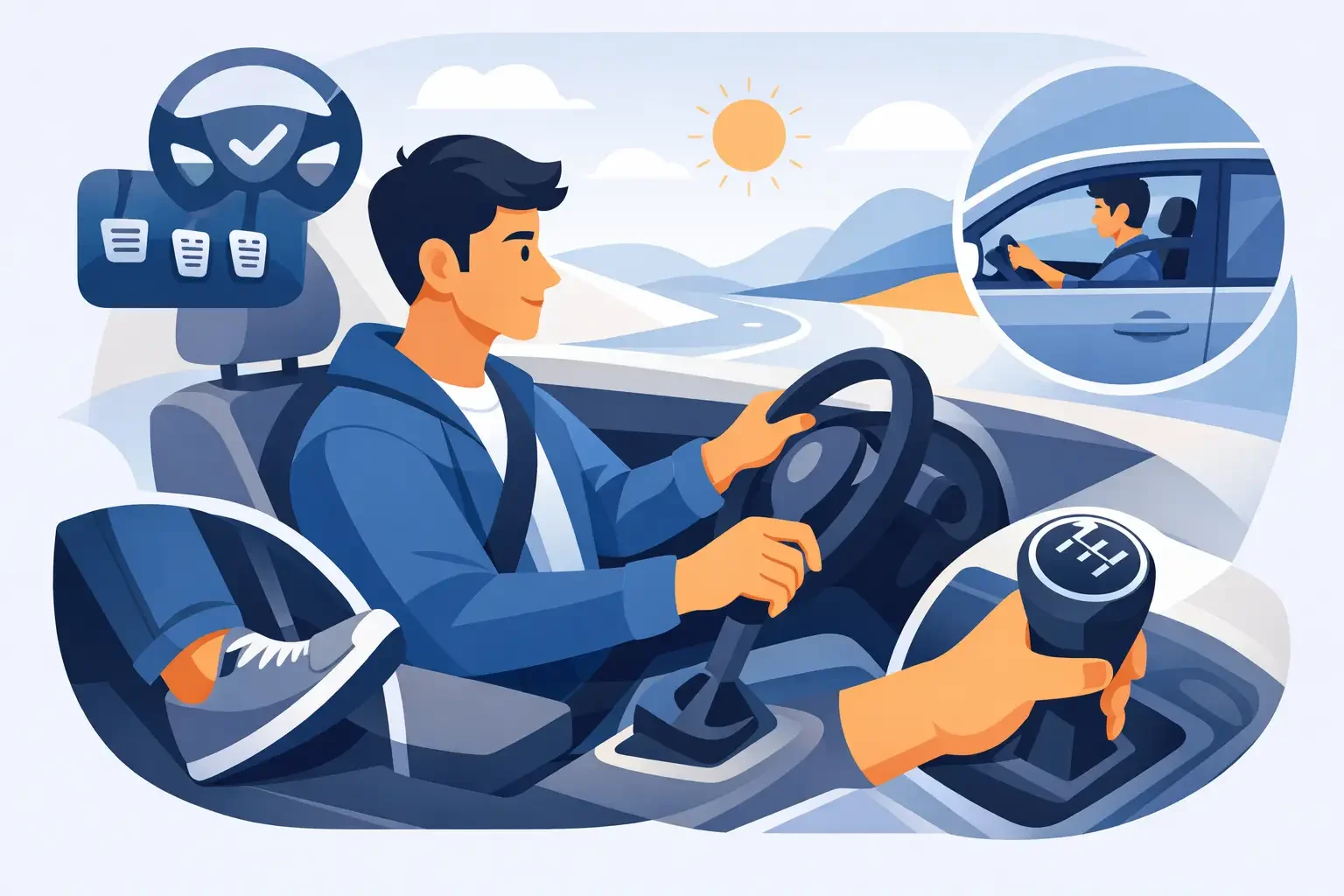
The first time you sit in the driver’s seat of a manual car, there can seem to be a lot happening at once. Three pedals, a gear lever, mirrors, signals and traffic all compete for your attention. The good news is that learning how to start manual driving is not about getting everything perfect immediately. It is about building one calm, repeatable routine at a time, with plenty of safe practice.
For most beginners, the clutch is the part that feels unfamiliar. Once you understand how it works and practise finding the biting point, moving off becomes far less daunting. A patient instructor will give you the time and space to develop that feel without rushing you into busy situations before you are ready.
Before you start the engine
A good move off begins before the car is running. Take a moment to get comfortable and set yourself up properly. Adjust the seat so you can fully press the clutch pedal to the floor without stretching, while still keeping a slight bend in your knees. Set the backrest so you can hold the steering wheel comfortably, rather than leaning forward.
Next, adjust the interior mirror and door mirrors. You should be able to check what is behind and alongside the car with a quick glance, not by moving your whole body. Fasten your seat belt, make sure the handbrake is on and check that the gear lever is in neutral. In neutral, the lever will move freely from side to side.
This set-up is not just something to do at the start of a lesson. It gives you proper control of the car and helps you develop safe habits that will matter long after you have passed your test.
How to start manual driving: pedals and gears
In a manual car, the pedals are arranged from left to right: clutch, brake and accelerator. Your left foot operates only the clutch. Your right foot moves between the brake and accelerator. Keeping that routine from the beginning prevents confusion later.
With the handbrake on and the gear lever in neutral, press the clutch fully to the floor. Turn the key or press the engine start button, depending on the vehicle. Check the dashboard for any warning lights that should go out once the engine starts.
To select first gear, keep the clutch down and move the gear lever into first. In many cars, this is up and to the left, but do not rely on memory alone. Look at the gear pattern on the top of the lever until it becomes familiar. Your instructor can show you how much pressure the particular car needs, as gear changes can feel slightly different between vehicles.
At this stage, you are ready to prepare to move away. But before releasing the handbrake, take proper observations. Check the interior mirror, the relevant door mirror and your blind spot. Look for cyclists, pedestrians, motorcyclists and other road users who may be close to the car. Signal if necessary, but remember that a signal tells others what you intend to do. It does not give you priority.
Finding the biting point without panicking
The biting point is where the clutch begins to connect the engine to the wheels. It is the key skill behind a smooth start in a manual car.
With first gear selected, gently press the accelerator to create a small, steady amount of power. Then raise the clutch slowly and gradually. At the biting point, you may notice the front of the car lift slightly, hear a subtle change in engine sound or feel a small vibration through the pedals. Every car feels a little different, so this is something you learn through your feet rather than by watching a gauge.
Keep the clutch still when you find that point. If it is safe to move, release the handbrake and allow the car to roll forward under control. As the car gains momentum, continue lifting the clutch smoothly while adding a little more accelerator. Avoid taking your foot off the clutch too quickly. That is what commonly causes a stall.
If the engine does stall, do not worry. It happens to almost every learner, including people who later become very confident drivers. Secure the car with the brake and handbrake if needed, select neutral, restart the engine and begin the routine again. The right response is calm and methodical, not embarrassed or flustered.
Moving off safely on a real road
Learning the pedal movements on a quiet road or suitable practice area is only part of the task. The driving test, and everyday driving, require you to move away safely and with good awareness.
Before moving off, use the MSPSL routine: mirrors, signal, position, speed and look. For a straightforward move away from the left-hand side of the road, this means checking your mirrors, signalling if it will benefit other road users, considering your position, selecting first gear and looking carefully around the car before moving. Your blind-spot check is particularly important. A cyclist may be travelling up the inside, even on roads that appear quiet.
Busy Birmingham roads can make this feel more demanding, especially around the city centre, Aston, Edgbaston or Selly Oak. That is why a sensible lesson plan starts in calmer streets and gradually introduces junctions, roundabouts, traffic lights and busier routes as your confidence grows. There is no benefit in being placed in difficult traffic before your clutch control and observation routine are ready.
When to change from first to second gear
First gear is for moving off and very slow manoeuvring. Once the car is rolling and you have built a little speed, you will normally change into second gear. Your instructor will help you judge the right point for the car and road conditions, but listen to the engine as well as watching your speed.
To change gear, ease off the accelerator, press the clutch fully down, move the gear lever from first to second, then bring the clutch up smoothly before gently returning to the accelerator. Try not to stare at the gear lever. At first, it is natural to glance down, but your attention needs to remain on the road ahead. With repetition, the movement becomes familiar.
A rushed gear change can make the car jerk or lose speed. A slow one can leave the car coasting for too long. Early on, aim for controlled rather than quick. Smoothness comes first, and speed follows with practice.
Common beginner mistakes and what they mean
Stalling usually means the clutch came up too quickly, there was not enough accelerator, or both. It is useful feedback, not a sign that you cannot drive a manual. Practise holding the biting point briefly and letting the clutch rise in stages.
Rolling back on a hill is another common concern. On an uphill start, use the handbrake to hold the car still while you find the biting point. When the car feels ready to pull forward, release the handbrake and move away. This is safer than trying to balance the car using only the foot brake and clutch.
Some learners also keep their foot resting on the clutch after changing gear. Once the clutch is fully up, move your left foot back to the footrest. Resting on the pedal can cause unnecessary clutch wear and may affect your control.
Finally, do not focus so intensely on your feet that you forget the road. A manual car asks more of you at first, but observations always come first. If you need more time, it is better to wait safely than to move into a gap you are unsure about.
Practising with the right support
You can practise privately with a suitable supervising driver, provided you meet the legal requirements for a provisional licence, insurance and L plates. However, private practice works best when it supports professional lessons rather than replaces them. A qualified instructor can spot habits that friends or family may miss, explain what a driving examiner is looking for and keep each lesson focused on your next step.
At G’s Driving School, every minute of your lesson is spent behind the wheel, building practical skill at a pace that suits you. Whether you are a nervous beginner, fitting lessons around work or university, or looking for a more intensive route to your test, one-to-one tuition gives you room to ask questions and practise properly.
You do not need to make a perfect start every time you drive. You only need to follow the routine, learn from each attempt and give yourself enough practice for the pedals and gears to feel natural. Confidence grows quietly, one safe move off at a time.