Can I Learn Manual Driving? Birmingham Guide
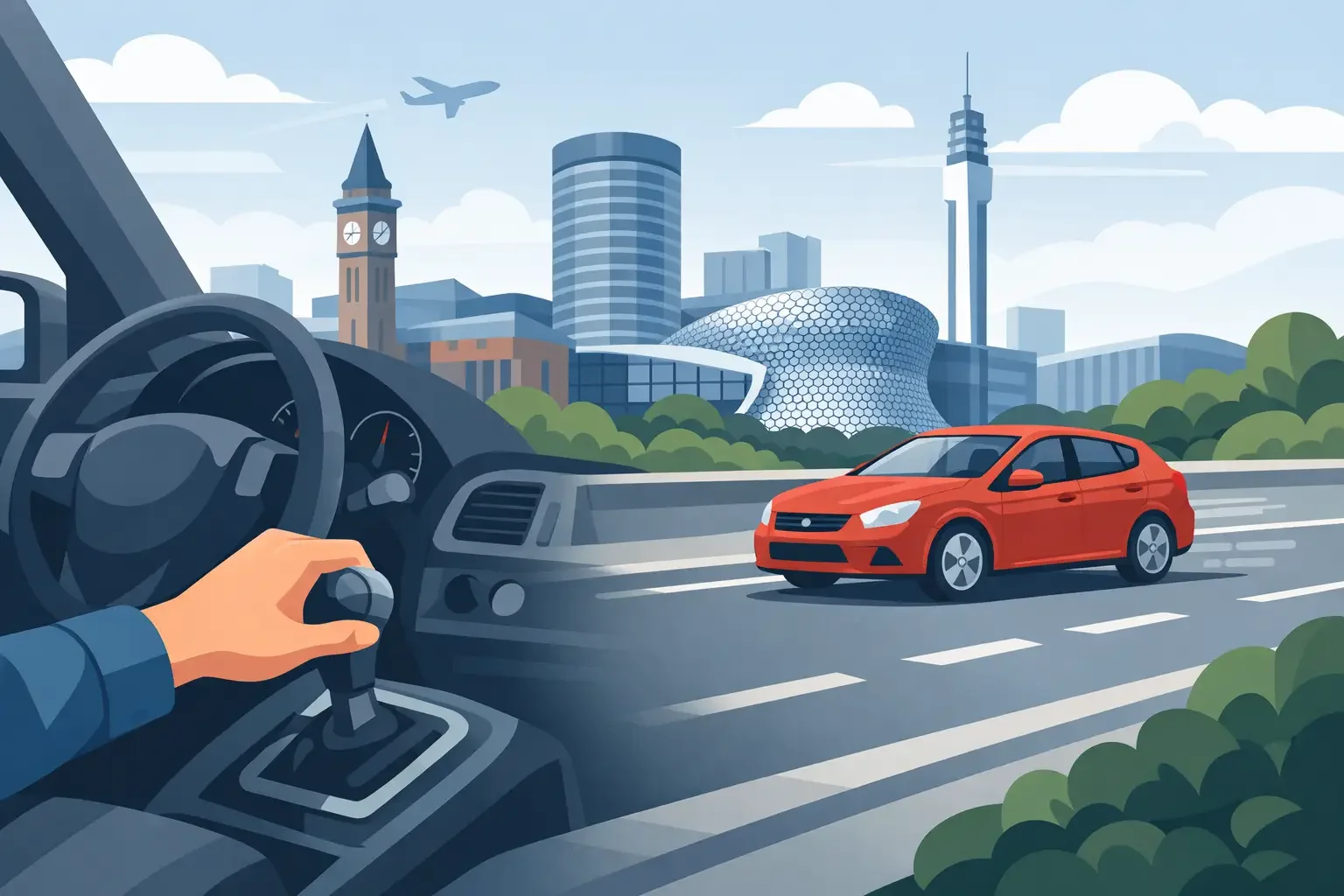
A manual car can feel like it has far too many things happening at once: three pedals, a gear lever, mirrors, traffic and someone waiting behind you at the lights. So, can I learn manual driving if I have never driven before, feel nervous, or have struggled in the past? Yes. Most learners begin exactly there, and the right tuition breaks each skill into manageable steps.
Learning manual is not about getting every gear change perfect on day one. It is about building control steadily, understanding what the car is telling you and becoming safe enough to make calm decisions on Birmingham’s busy roads.
Can I Learn Manual Driving as a Complete Beginner?
Yes. You do not need previous experience, natural confidence or mechanical knowledge to start. Your instructor will introduce the controls before expecting you to deal with busy traffic. Early lessons often begin somewhere quieter, where you can get comfortable with the driving position, mirrors, steering and moving away safely.
The clutch is usually the part learners worry about most. It takes time to find the biting point and coordinate your left foot with the accelerator, but it is a physical skill rather than a mystery. Repetition helps. After several controlled starts and stops, your feet begin to recognise the pressure needed without you having to think through every movement.
Everyone progresses at a different pace. One learner may quickly move on to roundabouts but need extra work on manoeuvres. Another may understand road awareness straight away but take longer with gear changes. Good manual lessons respond to that difference rather than rushing through a fixed script.
What You Will Learn in Manual Driving Lessons
Manual driving lessons build skills in an order that keeps you safe and gives you a clear sense of progress. At first, you will learn how to prepare the car, move off, stop and steer accurately. You will then practise changing up and down through the gears, using the mirrors properly and positioning the car on the road.
As your control improves, lessons move into real situations: meeting oncoming vehicles on narrow streets, emerging at junctions, dealing with pedestrian crossings and reading road signs early enough to act on them. In Birmingham, that can mean learning to stay composed around buses, cyclists, multi-lane junctions and traffic that changes pace quickly.
Later lessons focus on independent driving and the practical test standard. You will practise following signs or a sat nav, dealing with different types of roundabout and completing the required manoeuvres. More importantly, you will learn to spot developing hazards and make safe choices without waiting to be told.
Manual means more choice after you pass
A full UK manual licence allows you to drive both manual and automatic cars. That can be useful if you expect to share a family car, hire a vehicle or want a wider choice when buying your first car. Manual cars are less common than they once were, particularly as electric vehicles become more popular, so this benefit will matter more to some people than others.
An automatic licence is still a valid route to independence, and it may suit a learner who needs to pass in a shorter timeframe or finds clutch control a major barrier. The best choice depends on your needs, confidence and the cars you are likely to use. There is no prize for choosing the harder option if automatic driving is the right fit for your life.
How Long Does It Take to Learn Manual Driving?
There is no honest one-size-fits-all answer. Your previous experience, lesson frequency, confidence, opportunities for private practice and how regularly you revise the Highway Code all make a difference. Some pupils need a focused block of intensive training; others learn better through regular weekly lessons that allow time for skills to settle between drives.
What matters is consistent, purposeful practice. Long gaps can mean spending part of the next lesson rebuilding confidence, while regular sessions help you remember clutch control, routines and road awareness. Private practice can help too, provided you are properly insured, supervised by someone who meets the legal requirements and practising the same safe habits you learn in lessons.
Passing should not be treated as a race. A quick test pass is useful, but a licence is only the start of driving independently. The aim is to reach test standard with enough judgement and control to cope when no instructor is beside you.
Is Manual Driving Hard on Birmingham Roads?
Birmingham is a useful place to learn because it prepares you for everyday driving, not just quiet roads. You may encounter closely parked cars in residential areas, busy shopping streets, complex junctions near the city centre and changing traffic flow around Aston, Edgbaston, Selly Oak or the Jewellery Quarter.
That does not mean beginners are thrown into difficult situations straight away. Lessons should build up gradually. A calm instructor chooses roads that match your current ability, then introduces new challenges when you are ready. You might practise hill starts on a suitable slope before managing them in heavier traffic, for example.
Busy-road experience is valuable because manual driving is not simply about operating the pedals. You need to choose the right gear while keeping your attention on what other road users are doing. With practice, those actions become less separate: you slow down, select the correct gear and look ahead as one smooth routine.
What if You Stall or Feel Embarrassed?
Stalling is normal. It happens to beginners, experienced drivers and even instructors occasionally. A stall at a junction can feel very public, especially if another driver sounds their horn, but it is not a failure and it does not mean you cannot learn manual.
Your first priority is to stay composed. Secure the car, restart it when safe and carry on. During lessons, you will practise the recovery routine until it becomes familiar. The aim is not to avoid every mistake. It is to respond safely when something does not go to plan.
Nerves are equally common. Tell your instructor if traffic, roundabouts or the test itself makes you anxious. Clear explanations, a steady pace and lessons tailored to you can make a substantial difference. Being nervous does not prevent progress; trying to hide it can make learning feel harder than it needs to be.
Making the Most of Your Lessons
Arrive ready to concentrate and wear comfortable footwear with a thin, secure sole. Heavy boots, loose sandals and very thick soles can make clutch control more difficult. Between lessons, spend a few minutes thinking about what went well and what you want to revisit next time. That small habit makes each lesson feel connected rather than starting from scratch.
Use theory study alongside your practical training. Understanding road signs, stopping distances, hazard awareness and rules at junctions gives you more mental space when you are driving. It is much easier to act decisively at a roundabout when the rules already make sense.
At G’s Driving School, one-to-one manual lessons are structured around your experience and timeframe, with every minute of your lesson spent behind the wheel. Whether you need regular tuition, a refresher or an intensive course, the focus remains the same: safe control, growing confidence and practical preparation for the roads you will actually use.
When Should You Book Your First Lesson?
Book when you are ready to begin, not when you think you will feel completely fearless. Confidence usually follows experience. If you have a provisional licence and want to understand what manual driving involves, an initial lesson gives you a realistic starting point and a chance to ask questions without pressure.
You do not have to prove anything in your first hour. You only have to make a start. With patient instruction, regular practice and enough time to develop good habits, a manual car soon feels less like a collection of controls and more like a practical way to get where you need to go.