How to Reverse Bay Park Confidently and Safely
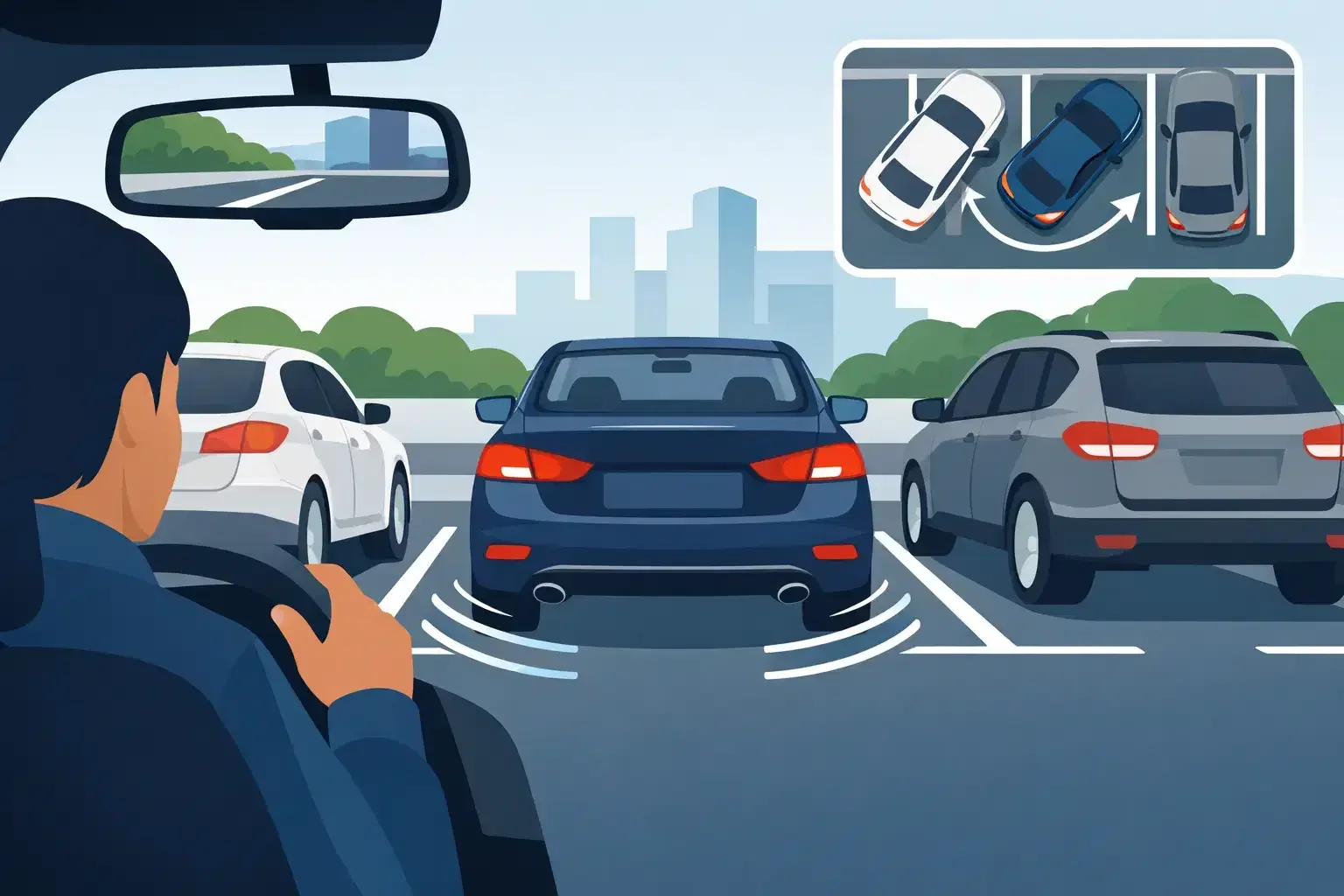
A reverse bay park can feel like a lot to manage at first: slow clutch control, steering at the right moment, checking around the car and keeping between two white lines. The good news is that once you understand how to reverse bay park, it becomes a repeatable routine rather than a guessing game.
For the driving test, the examiner is looking for control, accuracy and, above all, safe observation. You do not need to complete it quickly. A calm, well-observed manoeuvre is far better than rushing into a bay and having to make a risky correction.
What the examiner looks for during a reverse bay park
You may be asked to reverse into a parking bay in a car park, usually either to the left or right depending on the layout and the examiner’s instruction. You will normally be given time to drive forward and position the car before beginning the manoeuvre.
The aim is to finish wholly within the bay, reasonably straight and under control. You are allowed to correct your position if needed. In fact, making a safe correction is much better than accepting a poor final position. What matters is that you remain aware of people, cars and anything else moving nearby.
Before you start reversing, check all around. Use your mirrors, but do not rely on them alone. Look through the rear window and over both shoulders, especially towards the side you will be steering into. Continue to observe throughout the manoeuvre, pausing if a pedestrian, cyclist or vehicle comes close enough to be affected by what you are doing.
How to reverse bay park step by step
The exact reference points vary between cars and drivers. Your seating position, height and the shape of the rear windows all make a difference. Your instructor will help you find reference points that work in your lesson car, but the process below gives you the method behind them.
Set up with enough space
Drive slowly along the row of bays, keeping a sensible distance from the parked cars or bay markings. You need enough room to swing the front of the car as you reverse. If you begin too close to the bays, the car is likely to cut across the line. If you begin too far away, you may make the turn too wide.
Stop at the reference point your instructor has shown you. This is often when a chosen line or bay marking appears in a particular place in your side window or mirror. Select reverse gear and carry out a full observation check before the car moves.
Keep the car moving at walking pace or slower. In a manual car, this usually means using careful clutch control with the brake ready. Avoid adding accelerator unless the car genuinely needs it. Slow speed gives you time to see, think and steer accurately.
Begin the turn at your reference point
As you reverse, look mainly through the rear window in the direction of travel, with regular checks around the car. When you reach your turning reference point, steer briskly towards the bay. Many learners hesitate here and turn the wheel too slowly, which often leaves the car wide of the space.
There is no prize for turning the steering wheel gently. It is usually better to steer decisively while the car is creeping slowly. Your hands should remain in control of the wheel, and your attention should stay on where the car is going rather than fixed on one mirror.
Use the door mirror on the side nearest the bay to monitor the bay line. You are looking for a safe, even gap between the side of the car and the line. Check the opposite side too. If one side looks much closer than the other, you may need to adjust before going too far back.
Straighten the wheels as the car enters the bay
Once the car is coming into the bay and looks broadly parallel with the lines, unwind the steering so the wheels become straight. This is the part that improves with practice. Straightening too early can leave the car angled across the bay; doing it too late can make it finish too close to one line.
Your instructor may use a rear-window or mirror reference to show when to straighten. Learn why it works rather than trying to memorise it blindly. If you move to a different car after passing, the reference will change, but the principle of checking the car’s angle and position will not.
Continue reversing until the rear of the car is safely inside the bay. Stop when you can see that the car is fully within the lines and there is enough space behind to avoid crossing the rear boundary. Secure the car with the handbrake and select neutral when instructed.
Observations matter more than perfect lines
A reverse bay park is not only about the finished position. Car parks are unpredictable places, particularly around Birmingham’s busy supermarkets, retail parks and city-centre spaces. A child may walk behind the car, a trolley may appear from between vehicles, or another driver may begin reversing nearby.
If anything approaches, stop. Keep checking until it is safe to continue. Do not feel pressured by a waiting driver. You are responsible for your car, and waiting a few seconds is always the sensible decision.
During a driving test, stopping for someone who is approaching is a positive sign of judgement. Continuing because you are worried about holding people up can create an avoidable fault. Keep the car still, observe properly and move only when you are sure the space around you is clear.
Common reverse bay parking mistakes and how to fix them
The most common issue is rushing. Learners sometimes release the clutch too quickly, then struggle to make observations and steering changes in time. Practise bringing the car to a very slow, steady reverse using the clutch and brake together. Good low-speed control makes every parking manoeuvre easier.
Another frequent problem is staring into one mirror. Mirrors are useful for judging the lines, but they cannot show every hazard around the vehicle. Make your observation routine active: rear window, side mirrors, side checks, then back to the rear window. The order can change with the situation, but your awareness should never stop.
Turning too early usually brings the car too close to the first line of the bay. Turning too late often leaves it wide or angled. Rather than repeatedly guessing, ask your instructor to explain a reliable reference point, then practise it in different bays. A reference should support your judgement, not replace it.
Finally, do not assume one attempt must be perfect. If you are not positioned correctly, stop, assess the space and make a controlled correction. Depending on the situation, you may be able to pull forwards slightly and reverse again. Safe corrections show sound decision-making; forcing the car into place does not.
Practise the manoeuvre in different places
A quiet, empty car park is a useful starting point because you can focus on the steering and the lines. Once the basic routine feels comfortable, practise in busier places with an instructor beside you. That is where you learn to balance the manoeuvre with real observation, patience and awareness of other road users.
It also helps to practise in bays of slightly different widths and angles. Not every car park is laid out the same way, and a skill that only works in one familiar bay is not yet a dependable parking skill. Your aim is to understand the car’s movement well enough to adapt.
At G’s Driving School, every minute of your lesson is spent behind the wheel, so there is time to practise manoeuvres properly alongside the busy-road driving needed for everyday confidence and test preparation.
The next time reverse bay parking feels intimidating, slow the car down, look all around and trust the routine you have practised. A careful pause, a safe correction and steady control will take you further than trying to get it right at speed.