Are Manual Licences Worth It in Birmingham?
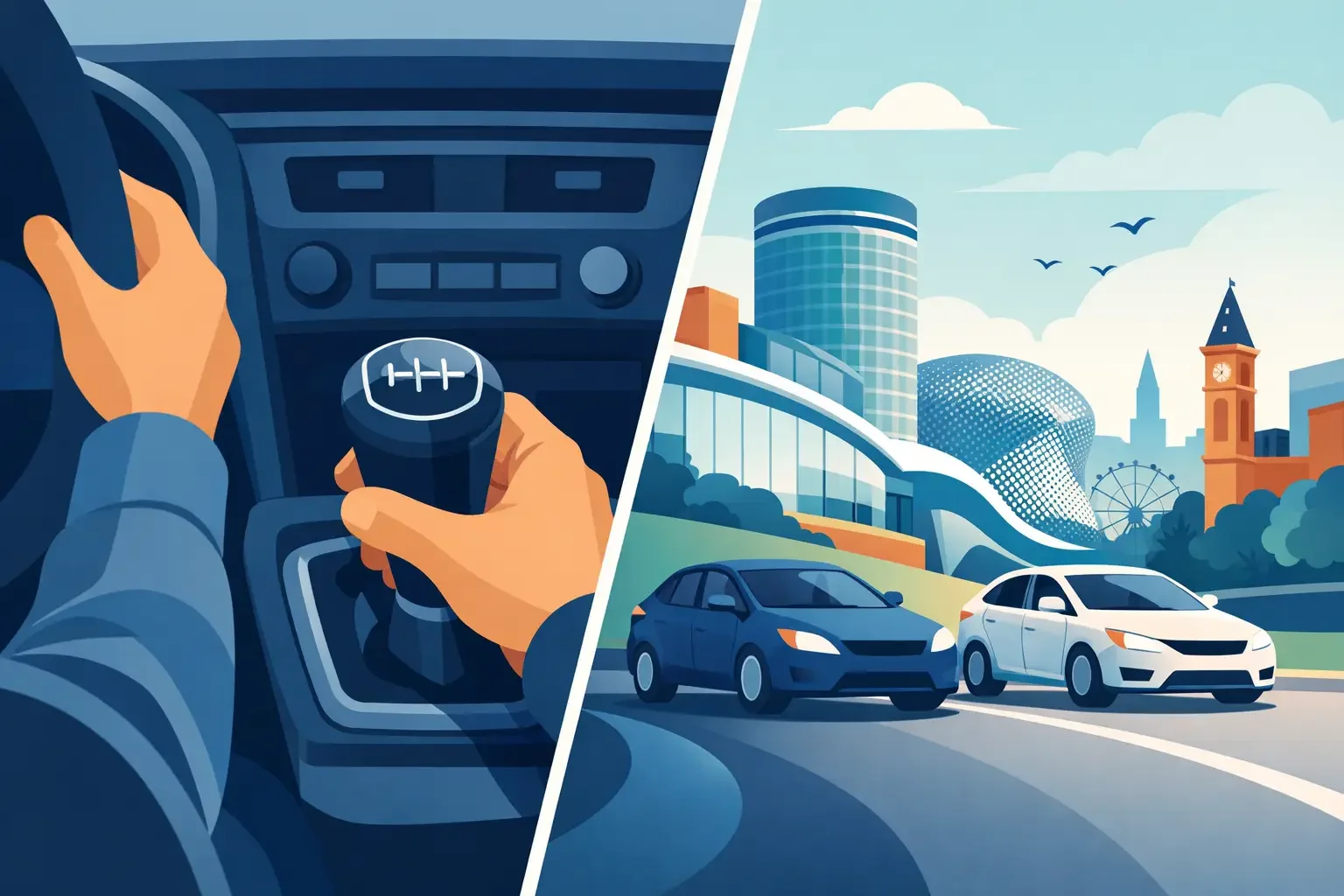
A manual licence can give you more freedom when it comes to choosing a car, applying for jobs that involve driving, or borrowing a family member’s vehicle. But manual licences are not simply about learning to change gear. They are about building the judgement, coordination and road awareness needed to drive safely and confidently on Birmingham’s busy roads.
For many learners, the first few manual lessons can feel like a lot to take in. There is the clutch, the gears, the mirrors, the traffic, the road signs and other drivers all competing for your attention. With calm, one-to-one tuition and a lesson plan that moves at your pace, those separate tasks soon start to feel like one smooth process.
What Can You Drive With a Manual Licence?
If you pass your practical driving test in a manual car, you can legally drive both manual and automatic cars. This is the main reason many learners choose to learn in a manual, even if they expect their first car to be automatic.
If you pass in an automatic car, your licence is restricted to automatic vehicles. That may suit some people very well, particularly if they know they will only drive an automatic. However, it can limit your choices if a manual car becomes available through work, family or a cheaper used-car option.
A manual licence does not make every driving decision for you, and it is not automatically the best choice for every learner. It does, however, keep more options open. For young drivers looking for an affordable first car, that extra flexibility can be useful.
Why Manual Licences Still Make Sense
Automatic cars are increasingly common, especially hybrids and electric vehicles. They are often easier to manage in stop-start traffic because there is no clutch or gear lever to operate. Yet manual cars remain widely available, and many drivers still value the control and choice that comes with holding a manual licence.
There is also a practical side to learning manual. Understanding clutch control, gear selection and engine response encourages you to read the road ahead. You learn to plan for a hill, approach a junction at the right speed and select a suitable gear before you need it. These are useful driving habits, not just test skills.
For Birmingham learners, this can matter on real local journeys. A quiet residential street may involve frequent pulling up and moving off. A route through Aston, Ladywood or Birmingham city centre can involve busy junctions, traffic lights, buses, cyclists and changing lanes. Good manual driving is not about rushing through the gears. It is about staying composed while making safe decisions.
Manual Licences Versus Automatic Licences
The better option depends on your circumstances, confidence and plans after the test. A manual licence offers greater vehicle choice, but it usually takes longer to become comfortable with the controls. An automatic licence can feel more straightforward at the beginning, but it comes with the restriction on what you can drive.
Some learners choose automatic because they are working towards a test within a short timeframe, have found manual lessons particularly stressful, or simply know they will only use an automatic vehicle. There is no shame in that decision. The right licence is the one that helps you become a safe, independent driver.
On the other hand, if you can give yourself time to learn and would like the broadest choice of cars, manual lessons are worth serious consideration. The early challenge of clutch control often pays off once the movements become natural.
Learning to Drive a Manual Car Step by Step
A good manual lesson should never leave you feeling thrown in at the deep end. You should understand what you are doing, why you are doing it and how each new skill fits into driving safely.
Most beginners start by getting comfortable with the car’s controls. That includes finding the biting point, moving away smoothly, steering accurately and stopping under control. From there, you can build towards changing gears, emerging at junctions, dealing with roundabouts and driving independently.
The key is repetition with purpose. If moving off on a hill is difficult, you need time to practise it properly rather than briefly trying it once and moving on. If roundabouts make you nervous, the answer is not to avoid them forever. It is to break the task down: approach speed, observations, lane choice, timing and safe positioning.
For Nervous Beginners
Nerves are common, especially when you are learning in traffic. You may worry about stalling, holding other drivers up or making a mistake in front of people you know. The truth is that every capable manual driver started as a beginner, and stalling is part of learning for many pupils.
The most helpful lessons are patient and structured. You should be given clear instructions, time to ask questions and the chance to revisit anything that does not yet feel right. Progress is not always perfectly linear. One lesson may feel easy, while the next brings a new challenge. What matters is that you are improving your control and confidence over time.
For Learners With a Deadline
If you need to pass within a particular timeframe, an intensive course may be a sensible route. It can help you practise consistently and keep skills fresh between sessions. However, intensive learning works best when it is based on an honest assessment of your current experience and availability.
A complete beginner will need enough time to absorb each skill safely. Someone who has already had lessons, or who is returning after a break, may need a more focused plan. The aim should be to become genuinely test-ready, not simply to get through a test date as quickly as possible.
Birmingham Roads Build Useful Experience
Learning in your local area means practising the situations you are likely to face after passing. Birmingham offers valuable experience for manual learners because no two roads are quite the same. You may deal with narrow parked-car streets in Selly Oak, busy commuter routes around Edgbaston, complex traffic near the Jewellery Quarter or city-centre lanes where forward planning matters.
This variety helps turn basic car control into confident driving. You learn when to slow down early, how to choose the right gear without panicking, and how to keep proper awareness around pedestrians, buses and cyclists. These are the skills that make everyday driving feel manageable after the L-plates come off.
At G’s Driving School, every minute of your lesson is spent behind the wheel, with one-to-one support from a DVSA-approved instructor. That gives you the time to practise the areas that matter most to you, whether that is clutch control, busy-road confidence, manoeuvres or preparation for your practical test.
How to Know You Are Ready for the Test
Being ready for a manual driving test is about more than completing a set number of lessons. You should be able to drive safely and independently, use the gears without needing constant prompts and respond sensibly when something unexpected happens.
You will need to show control when moving away, stopping, turning, approaching junctions and dealing with different road conditions. You will also need to demonstrate sound observations, safe positioning and good decision-making. A driving test examiner is not looking for perfection. They are looking for a driver who can manage the car safely without creating risk for themselves or others.
Mock tests can be useful near the end of your training because they show where you stand under test-style conditions. They can also help settle nerves by making the format more familiar. If there is an area that needs work, it is better to identify it before test day and spend time putting it right.
Choose Lessons That Work Around Your Life
Whether you are at college, university, working shifts or fitting lessons around family commitments, regular practice makes a difference. Flexible lesson times can help you keep momentum without adding unnecessary pressure to an already busy week.
Before booking, make sure you can discuss your experience honestly. Say if you are a complete beginner, have had a long break from driving, have a test booked or feel especially nervous about manual controls. A personal instructor can then shape the tuition around your starting point rather than putting you through a one-size-fits-all course.
A manual licence is a valuable goal, but the best reason to work towards one is not just the certificate. It is the confidence to pull away calmly, handle Birmingham’s roads safely and enjoy the independence that comes from knowing you can drive when it matters.