Manual Versus Automatic: Which Should You Learn?
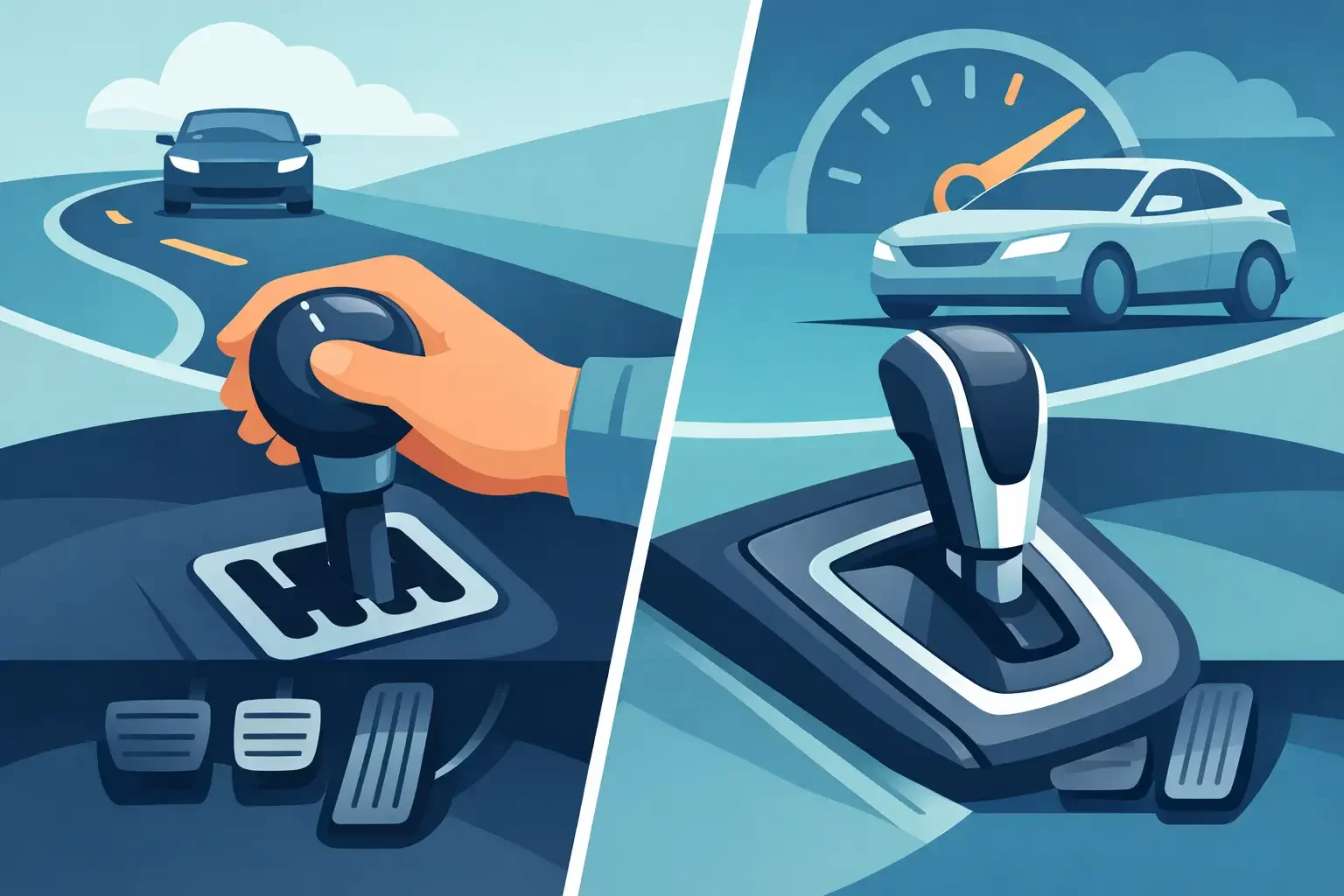
The manual versus automatic decision can shape your first few months of driving – and the type of licence you hold once you pass. For some Birmingham learners, an automatic car makes busy junctions and stop-start traffic feel far more manageable. For others, learning manual offers flexibility that is worth the extra practice. Neither choice is a shortcut to becoming a safe driver. The right one is the car that lets you build confidence, understand the road and make steady progress.
Manual versus automatic: the key difference
A manual car has a clutch pedal and gears that you select yourself. You learn how to pull away smoothly, change gear at the right time, manage hill starts and control the car in slow-moving traffic. It gives you more to coordinate at first, particularly when you are also learning observation, steering and road positioning.
An automatic car changes gear for you. There is no clutch pedal, so your left foot stays still and you use your right foot for the accelerator and brake. This can free up more mental space for checking mirrors, reading road signs and dealing with Birmingham’s busier roads.
The driving test itself follows the same standards whichever transmission you choose. You still need to drive safely and independently, use effective observation, follow sat nav directions when asked and demonstrate good judgement. Automatic lessons remove gear and clutch work, but they do not remove the need to plan ahead or deal calmly with real traffic.
What licence will you get?
This is usually the biggest practical factor. If you pass your test in a manual car, you can legally drive both manual and automatic cars. If you pass in an automatic, your full licence is restricted to automatic vehicles.
That restriction may not matter if you expect to own or use an automatic car. Automatic vehicles are increasingly common, especially hybrids and electric cars. However, a manual licence can give you a wider choice when borrowing a family car, looking at lower-priced used cars or applying for jobs that involve driving.
Think about your likely needs over the next few years, not only the car you would prefer for lessons. A learner who expects to drive a parent’s manual car after passing may benefit from learning manual. A working professional who needs an automatic licence quickly for their own automatic vehicle may make a sensible decision by focusing on automatic from the start.
Is automatic easier to learn?
Many learners find automatic driving easier in the early stages because there is less physical coordination to master. Without a clutch or gear lever to think about, pulling away at a busy roundabout can feel less daunting. This is especially helpful for nervous beginners, people returning to driving after a long break and pupils taking an intensive course with a clear deadline.
But easier is not the same as effortless. An automatic car can creep forwards when you release the brake, and its quicker acceleration can surprise learners who are not gentle with the pedal. You still need to develop controlled steering, safe following distances, mirror checks and the confidence to make progress when it is safe to do so.
Manual driving often feels demanding at first. Stalling is common, as is selecting the wrong gear or finding hill starts awkward. With structured one-to-one tuition, these skills become routine. Once your clutch control improves, you may enjoy the sense of control that a manual car provides.
The best question is not whether one is objectively easier. Ask which option will help you stay calm enough to learn well. If gears are likely to take up all your attention for several lessons, automatic may allow you to concentrate sooner on the road. If you are happy to practise and want the broader licence, manual may be the better long-term choice.
Cost, lesson time and the real value of progress
Automatic lessons can sometimes cost more than manual lessons because automatic vehicles can be more expensive to buy, insure and maintain. Prices vary, so it is worth checking the cost of the full course rather than comparing one lesson in isolation.
Some automatic pupils need fewer hours to become test-ready because they are not learning clutch control and gear changes. That can reduce the overall cost, but it is never guaranteed. Everyone learns at a different pace. Road awareness, decision-making and confidence cannot be rushed just because the car has fewer controls.
Manual lessons may take longer for some learners, particularly if they need extra time with moving off, junctions or hill starts. Yet the wider licence entitlement may offer value later. A manual car can sometimes be cheaper to purchase, and having the option to drive either type may save you from needing further training in the future.
A good lesson should make the most of your time whichever car you choose. At G’s Driving School, every minute of your lesson is spent behind the wheel, with tuition adjusted to the skills you need most. That matters more than chasing an unrealistic number of hours.
Birmingham roads can influence your choice
Learners in Aston, Nechells, Ladywood, Edgbaston, Selly Oak, Harborne and Birmingham city centre will meet a varied mix of roads. There are busy multi-lane routes, boxed junctions, pedestrian crossings, buses, cyclists, narrow residential streets and frequent stop-start traffic.
In heavy traffic, an automatic can feel more relaxed because you are not repeatedly working the clutch. It can be particularly appealing if you expect your regular driving to include city-centre journeys, commuting or school-run traffic.
Manual pupils should not be put off by this. Busy roads are also where good clutch control and planning develop quickly when taught properly. Learning how to choose the right gear before a junction, move away confidently on an incline and keep the car controlled at low speed can make you a capable all-round driver.
Your instructor should introduce challenging roads at the right time, rather than throwing you into them before you are ready. First build the basic controls in quieter areas. Then move on to roundabouts, dual carriageways, complex junctions and the routes that help prepare you for independent driving after the test.
Choose around your circumstances, not someone else’s opinion
Friends and family often have strong views about manual and automatic licences. Their advice can be useful, but their needs may be completely different from yours. A student hoping to share a manual car with family has a different starting point from someone buying an automatic hybrid for a daily commute.
Manual may suit you if you want maximum vehicle choice, enjoy learning practical mechanical skills or may need to drive different cars for work or family. It is also a sensible route if you have access to a manual car for private practice alongside lessons.
Automatic may suit you if you are anxious about coordination, have a limited timeframe, mainly expect to drive an automatic or want to focus fully on traffic awareness from the beginning. It is a valid route to a full driving licence, provided the vehicle you drive is automatic.
There are also personal comfort considerations. Some learners find frequent clutch use uncomfortable, while others simply prefer the involvement of driving a manual. Be honest about what will make regular practice realistic and positive.
Can you change your mind later?
Yes. You can move from manual to automatic lessons if manual is preventing you from progressing with confidence. You can also pass in an automatic and later take a practical test in a manual car to remove the automatic-only restriction. You will need suitable manual tuition and practice before doing so.
Changing direction is not failure. It is better to make a clear decision based on your progress than to keep paying for lessons that do not suit your goals. A straightforward conversation with an experienced instructor can help you weigh up your confidence, available time and the sort of driving you expect to do.
Before booking, consider the car you will use after passing, your budget for the whole learning process and how soon you need your licence. Then choose the route that gives you the best chance of becoming calm, safe and ready for the roads you will actually drive on.