10 Beginner Driver Mistakes That Cost Marks
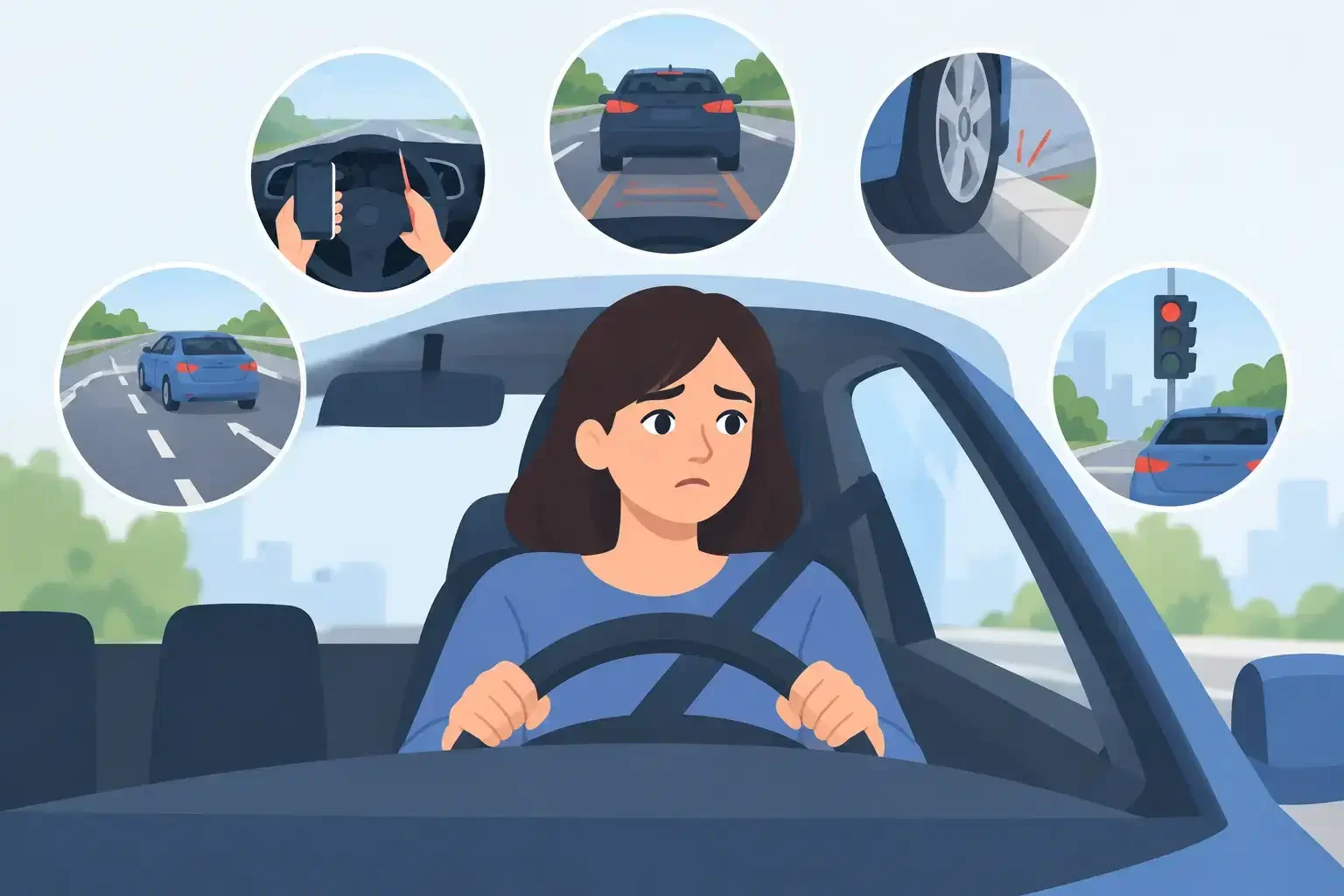
A busy roundabout, a hill start with traffic close behind, or a pedestrian stepping out near Birmingham city centre can make a new driver feel as though everything is happening at once. That feeling is normal. Most beginner driver mistakes are not caused by carelessness – they happen because a learner is still building routines for control, observation and decision-making.
The good news is that mistakes are useful when you understand what caused them. Driving lessons are the place to make them, correct them and practise the safer response until it feels natural. The aim is not to drive perfectly from lesson one. It is to become a calm, aware and responsible driver who can deal with real roads independently.
Beginner Driver Mistakes to Watch For
1. Looking too close to the bonnet
New drivers often focus on the road immediately in front of the car. It can feel safer because it is where the car is heading, but it actually makes steering less smooth and gives you less time to react. Looking further ahead helps you spot slowing traffic, changing lights, parked vehicles and developing hazards early.
Try to keep your eyes moving. Look well ahead, check your mirrors regularly and then scan the area around junctions, crossings and side roads. You do not need to stare at every possible hazard. You do need to notice what could affect your next decision.
2. Treating mirrors as a last-minute check
Mirrors are not just for changing lanes. They give you information before you slow down, turn, move off, overtake parked cars or respond to a hazard. A common mistake is checking them too late, especially when approaching a left or right turn.
Build a simple routine: mirrors first, then signal if needed, then position and reduce speed. The exact timing depends on the road and traffic behind you. On a quiet residential road, you may have more time. On a busy route through Aston, Ladywood or the city centre, earlier planning is essential so your actions do not surprise other road users.
3. Rushing the clutch on a manual car
Stalling is frustrating, particularly when other drivers are waiting. It is also one of the most common parts of learning a manual car. Usually, the problem is lifting the clutch too quickly, adding too much accelerator, or trying to do both before the biting point is established.
Take the pressure out of it. On level ground, learn where the biting point feels and sounds like before moving away. For hill starts, use the handbrake properly so you are not trying to hold the car on the clutch. Smooth control comes from repetition, not from forcing yourself to be quicker than you are ready for.
4. Braking late and sharply
Late braking can make passengers uncomfortable, unsettle the car and reduce your time to assess what is ahead. Learners sometimes do it because they are concentrating on gear changes or because they have not yet judged how quickly the car is approaching a junction.
As soon as you see a reason to slow down, ease off the accelerator and assess the gap. Gentle, early braking is usually better than a hard stop at the last moment. There are exceptions, of course. If a child runs out or traffic stops suddenly, firm braking may be necessary. The key is to leave enough space and attention available for the unexpected.
5. Choosing the wrong gear for the situation
Many pupils concentrate so hard on changing gear that they lose awareness of the road. Others stay in a higher gear for too long, leaving the car slow to respond, or select a low gear while travelling faster than the engine comfortably allows.
Use the sound and feel of the engine alongside your speed. Before a junction, decide whether you will need first gear to stop, second gear to turn, or whether you can continue safely without changing down too early. With practice, gears become a tool rather than a task that takes all your concentration.
6. Hesitating at roundabouts and junctions
A short pause to make a safe judgement is sensible. Waiting through several safe gaps because you do not trust your judgement can confuse other drivers and hold up traffic. The opposite mistake is pulling out because another vehicle appears to be far enough away without properly assessing its speed.
Approach roundabouts at a speed that lets you observe clearly. Check the road markings, use the correct lane, look to the right and make a definite decision when a safe opportunity appears. Busy Birmingham roundabouts can feel demanding at first, which is exactly why steady local practice matters. Confidence should come from good observations, not from taking chances.
7. Forgetting that parked cars can hide hazards
A line of parked cars is rarely just a line of parked cars. Doors can open, pedestrians can step between vehicles and an oncoming car may force you to give way. Learners sometimes steer around parked cars without checking mirrors or leave too little space when passing them.
Plan early. Check your centre and relevant door mirror, look ahead for gaps and position the car with suitable clearance where the road allows. If an oncoming vehicle means there is not enough room, be prepared to wait. Making progress is important, but it never comes before safety.
8. Focusing on the driving test instead of the road
Wanting to pass is understandable, especially if you need a licence for work, university or family commitments. However, trying to remember every test requirement while driving can make you stiff, distracted and more likely to miss what is actually happening around you.
The practical test assesses safe driving, not a rehearsed performance. If you develop sound habits in normal lessons, the test becomes an opportunity to show them. That includes responding safely if something does not go to plan. A stall, a missed turn or a request to repeat a manoeuvre does not automatically mean failure. How you deal with it matters.
9. Practising only on familiar, quiet roads
Quiet roads are valuable when you are learning basic control. They give you space to practise moving off, stopping, steering and clutch work without too much pressure. Staying there for too long, though, can leave you unprepared for busier traffic, complex junctions and changing road conditions.
Progress should be gradual and personal. One learner may be ready for dual carriageways early, while another needs more time with meeting traffic and roundabouts. A good lesson plan moves you beyond your comfort zone without overwhelming you. At G’s Driving School, every minute of your lesson is spent behind the wheel, giving you time to apply new skills where they matter.
10. Letting one error spoil the rest of the drive
The mistake after the mistake is often the one that causes the bigger problem. You might stall at traffic lights, take a corner untidily or select the wrong gear. If you keep replaying it in your head, you can miss the next mirror check, sign or developing hazard.
Acknowledge it, correct it if necessary and reset your focus. Experienced drivers do this too. Driving safely does not mean never making a small error. It means recognising it quickly and continuing with control and awareness.
Turn Mistakes Into Progress
The fastest way to improve is not to avoid difficult situations. It is to revisit them with clear feedback and enough practice to understand what you should do differently next time. Ask questions during your lessons, talk through decisions where helpful and be honest about the parts of driving that make you nervous.
You may need extra work on clutch control, roundabouts, parallel parking or independent driving. That is not falling behind. It is sensible training. A learner who takes time to build reliable habits is far better prepared for a practical test and for driving alone after passing.
Give yourself permission to learn at your own pace, but keep moving forward. Each calm, well-handled journey adds to the confidence you will need when the instructor is no longer sitting beside you.